
The Short Checklist
- Call now and describe the affected rooms; restoration cost depends on the damage inspected.
- Ask how water category, wet square footage and materials change the required work.
- Review drying, removal and rebuilding separately in the written scope before work starts.
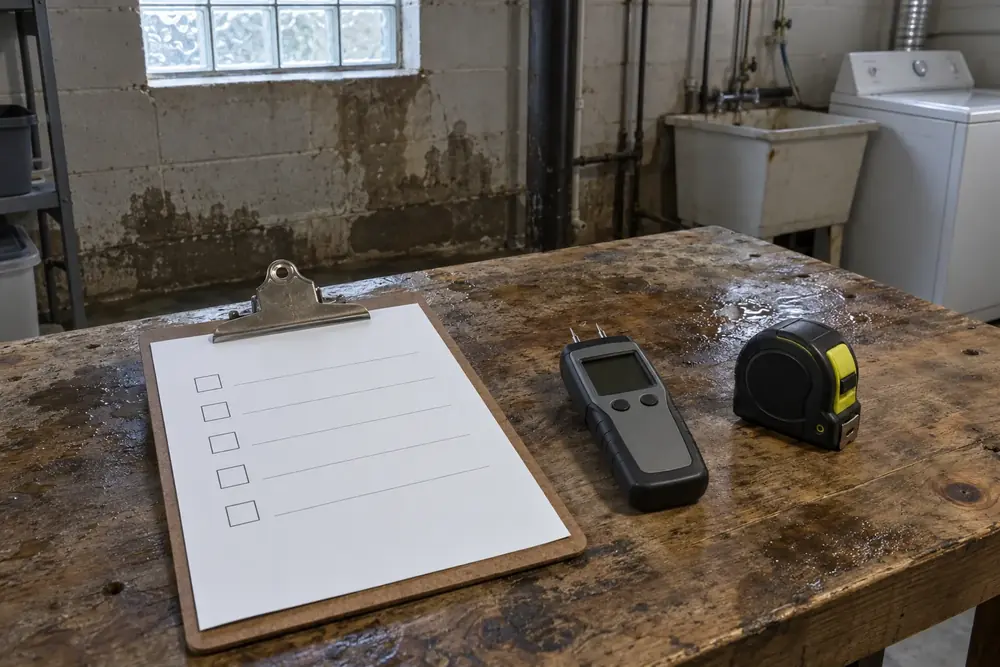
- Call now to describe the water and the rooms affected.
- Identify the likely source from a safe, dry location.
- Point out wet flooring, walls and ceilings during the inspection.
- Request a written breakdown of cleanup, drying and repairs.
Water damage restoration price depends on the condition of the rooms and materials that need attention. The visible puddle is only part of the job: moisture may reach carpet padding, wall cavities or the floor beneath a finished surface. An inspection establishes the affected area and the work needed.
A firm price given without seeing the damage leaves important questions unanswered. A dry-looking ceiling stain and saturated insulation above that ceiling need different work. Call while the damage is developing; you don't need room measurements or a finished inventory to start the conversation.
Water category and affected square footage
- Describe whether the water came from a pipe, drain or outdoors.
- Keep children and pets away from sewage or unknown water.
- Show your technician every affected room without entering unsafe areas.
The water's source and contamination level affect the cleanup method and the materials that need removal. Your technician assesses the water category rather than relying on its color or smell. Clear-looking water alone doesn't establish that a room is safe to enter.
Square footage matters because more wet surface requires more extraction, drying or replacement. Basement flood cleanup cost also depends on depth, stair access and whether stored belongings obstruct the wet area. A small finished basement may involve more removal than a larger room with an exposed concrete floor.
Materials, removal and rebuilding
- Identify each wet surface without pulling it apart yourself.
- Flag sagging ceilings and stay out from underneath them.
- Request separate entries for material removal and rebuilding.
Materials change the work involved: carpet, wood, drywall and insulation hold and release moisture differently. Water damage floor repair cost depends on the affected layers, including padding or subflooring beneath the visible finish. Your technician checks whether those layers need drying, removal or replacement.
Ceiling water damage repair cost includes the work needed to reach wet material safely and restore the affected surface. Ask whether insulation removal, drywall replacement, trim and painting are included. The cost to fix water damage should account for necessary rebuilding as well as getting the standing water out.
Time wet and days of drying
- Share when you first noticed the leak or standing water.
- Mention any time the affected rooms stayed closed or unattended.
- Request moisture readings that support the drying plan.
Time wet affects how far moisture travels into porous materials and concealed spaces. Leaving water in place can add damage and increase the general risk of mold. Report what you know about the timing, and say when you're unsure instead of guessing at an earlier date.
Days of drying depend on the materials, moisture readings and room conditions. Structural drying uses equipment and repeat checks to track progress. The surface feeling dry doesn't establish that underlying layers are ready for repairs. Ask how equipment use, monitoring visits and changes to the drying plan affect the total.
The scope and price before work starts
- Review the planned extraction, drying and repair tasks.
- Ask which material replacements and finishing work are included.
- Request an explanation of any change before added work proceeds.
Before any work starts, one of our local water damage partners goes through the planned tasks and their price with you. The written scope should connect each task to the damage found during inspection. Water damage repair price is easier to assess when removal, drying, disposal and rebuilding have clear descriptions.
Q: How much does water damage repair cost? A: The cost depends on the inspected damage and the agreed scope of work. Keep the written scope, moisture readings and photographs together for insurance documentation. Those records describe the damage and restoration work; they don't establish an insurance payment.