
The Short Checklist
- Call for cleanup now and photograph visible damage from a safe position before anything is moved.
- Record dates, affected rooms and observations about the water source without guessing.
- Request dated moisture readings and a written restoration scope; retain damaged items safely or save photos.
- Keep photos, item lists, receipts and restoration records organized by room and date.
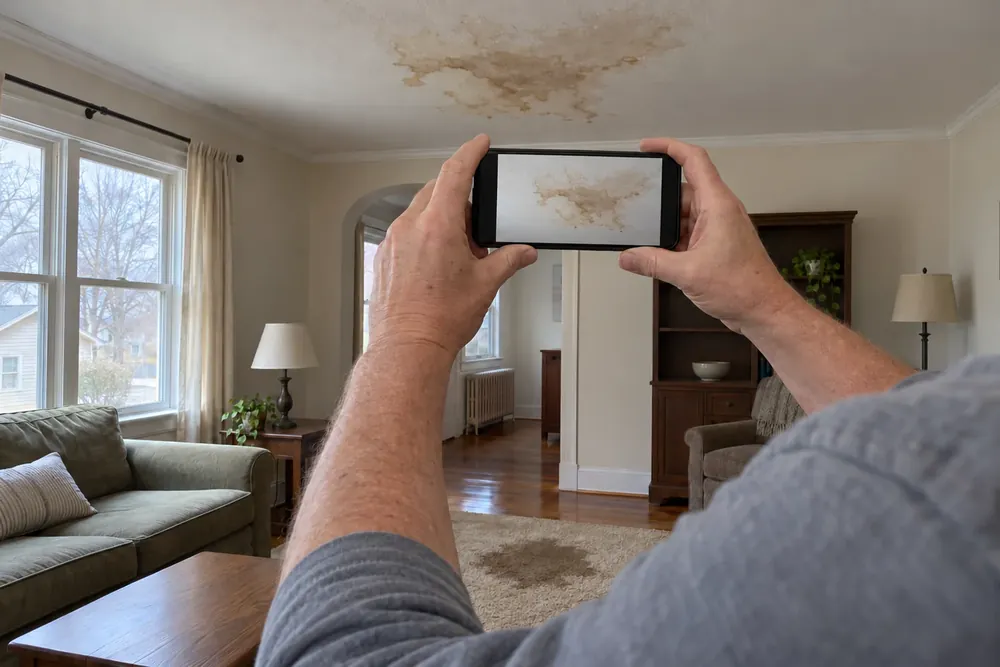
- Call for water damage cleanup while you start a record.
- Photograph affected rooms from safe, dry positions before anything is moved.
- Record when you noticed the water and what you observed.
- Save inspection records and the written restoration scope together.
Water damage home insurance documentation records what got wet, when you noticed it and what restoration work followed. Start with visible facts. A note that water was dripping beneath the bathroom is useful; a guess about a hidden pipe adds uncertainty to the record.
You don't need a complete file to call for help. Photograph or film the room only if you can stay clear of standing water, wet outlets and unstable ceilings. Let your technician document areas you can't safely approach.
Photos and video before materials are moved
- Take a wide view showing the affected room and its layout.
- Add close views of stains, water lines and damaged belongings.
- Keep the original photo and video files with their dates.
Photos and video preserve the visible condition before extraction, furniture moves or material removal change the scene. Include the connection between a wet ceiling and the floor beneath it, or between soaked carpet and the adjoining wall. A room view helps place a close view in context.
For ceiling water damage documentation, photograph the stain from below without standing under sagging material. Record nearby wall marks and floor damage from a safe position too. Don't climb into a wet ceiling cavity or touch electrical fittings to get a clearer picture.
Moisture readings with dates and locations
- Request the inspection moisture readings for affected materials.
- Ask for each reading's date, location and material type.
- Keep later drying checks alongside the initial inspection record.
Moisture readings document conditions beyond a visible stain or puddle. A useful record identifies where your technician took a reading and what material was tested, rather than presenting an unexplained number. Later checks show how the recorded conditions changed during drying.
Readings and photographs serve different purposes, so retain both. A photo shows the room's visible condition; a dated reading records the tested material at a particular point. For broken pipe water damage, insurance documentation should also include observations about the leak location and when it was discovered.
A written scope and a record of belongings
- Request a written scope describing extraction, drying and material removal.
- List damaged belongings by room with identifying details.
- Keep damaged items when safe, or preserve clear photos of them.
- Save receipts and record changes to the planned work.
The written scope describes restoration tasks and the materials involved. One of our local water damage partners explains the work and its price before cleanup begins; the written scope also records the tasks involved. Keep water damage restoration records with your insurance paperwork so photos, readings and work descriptions stay together.
For damaged belongings, note the item type, location and visible condition. Include identifying details such as a model number when accessible. Don't handle contaminated items or store them in a living area just to retain them. When safe retention isn't practical, keep photos, item descriptions and a record of removal rather than putting yourself at risk.
Organize photos, readings and work records
- Group photos and item lists by affected room.
- Keep inspection dates and later drying checks in order.
- Save the written scope, receipts and records of material removal together.
A room-by-room file connects the visible damage with readings, belongings and restoration tasks. The Ohio Department of Insurance's disaster recovery tips recommend documenting losses and keeping an inventory of possessions. Keep the same factual approach throughout your damage record.
A clear file describes damage, observations and work. Your technician records conditions and the restoration scope. For a practical way to organize the work descriptions, read what water damage restoration includes.