
The Short Checklist
- Call now for water damage cleanup and arrange a plumber to repair the broken pipe.
- Close the main water shutoff only if the valve is safely reachable from a dry area.
- Stay away from wet outlets, appliances, electrical panels, and sagging ceilings.
- Photograph damage and move valuables only from safe, dry footing.
- Call for cleanup as soon as you notice escaping water.
- Arrange plumbing repair alongside water removal.
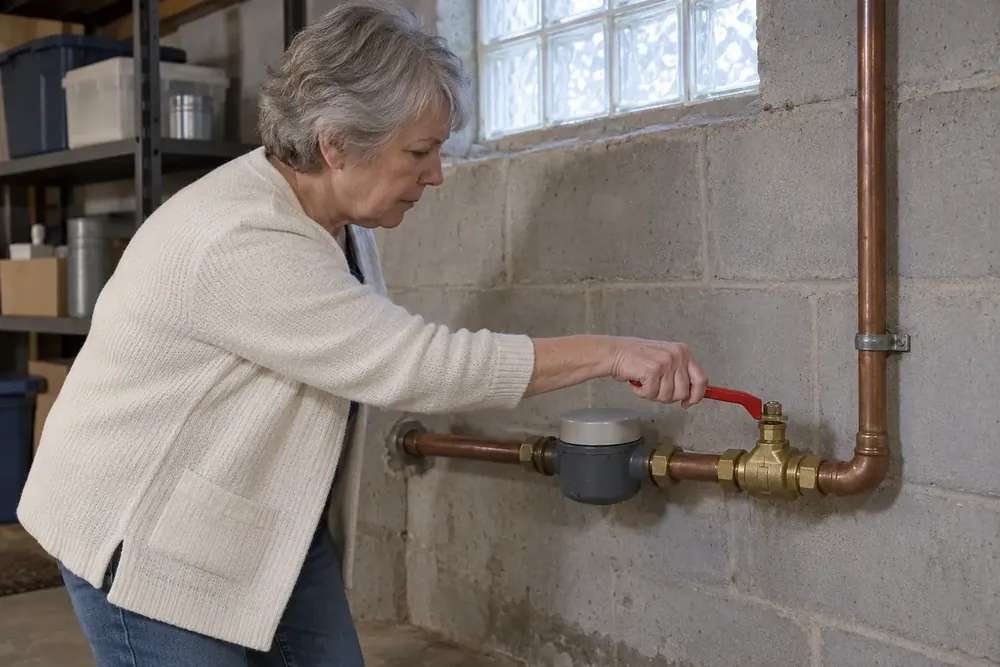
- Close the main shutoff from a safe, dry position.
- Keep everyone out of areas with electrical or ceiling hazards.
Stopping the supply and arranging cleanup are the first priorities when a pipe breaks. During the call, describe the rooms affected, whether water is still flowing, and any hazards visible from a safe position. You don't need to locate the exact break to request help.
A plumbing repair stops the source; cleanup addresses the water already inside the building. Burst pipe water damage may reach beyond the puddle you first notice, so mention damp walls, ceiling stains, and adjoining rooms as well as standing water.
Safe Shutoff and Electrical Precautions
- Use the main shutoff only when the route and valve are safe to reach.
- Keep your hands away from wet switches and plugs.
- Leave power isolation to an electrician when access is wet or unsafe.
- Stay clear of swollen ceilings and loose overhead material.
Close the main valve without crossing standing water or entering a hazardous utility area. Don't force a stuck valve. Explain the access problem during your call so the water source and safety concerns become part of the plan.
Don't unplug appliances while standing on a wet floor or reach into a wet electrical panel. Avoid using a household vacuum to collect water. A ceiling that is sagging or dripping needs assessment; poking a hole or pulling down material exposes you to falling debris and concealed wiring.
Signs of a Burst Pipe Inside a Wall
- Report a stain that keeps spreading across paint or drywall.
- Listen for hissing or rushing water without opening the wall.
- Mention a meter that keeps moving when fixtures and water-using appliances are off.
- Leave wall cutting and leak location to the people handling the work.
A growing stain, unexplained water noise, or continuing meter movement can suggest a concealed leak. A meter that moves with known water use turned off indicates unexplained consumption, but doesn't identify the pipe or prove that the leak is inside a wall. Share observations without delaying the call to perform a test.
Broken pipe water damage can also show up at a baseboard or in the room below the break. Don't use the visible stain as a cutting boundary: water may have followed framing or entered insulation beyond the mark.
Frozen-Pipe Thawing Cautions
- Call a plumber for a frozen pipe you cannot locate or reach safely.
- Avoid blowtorches, fuel-burning heaters, and every other open flame.
- Keep electrical heating devices away from water.
- Keep the supply shut off when a break is known or suspected.
The American Red Cross recommends gentle heat for an accessible frozen pipe and warns against open flames. Its thawing guidance includes keeping the affected faucet open so melting water can escape. Those steps apply to an intact frozen line, not a reason to reopen the supply to a damaged pipe.
If the frozen section is concealed, inaccessible, or won't thaw, leave the work to a plumber. A trickle at a faucet can suggest freezing; it doesn't establish whether the line is intact. Report any visible split or fresh leak immediately.
Valuables and Damage Documentation
- Move dry valuables away from the affected area when footing is safe.
- Photograph wet surfaces without entering hazardous rooms.
- Record when you noticed the leak and when the supply was closed.
- Keep cleanup records, moisture readings, and the written scope together.
Photos and a short sequence of events create a useful record without interrupting cleanup. Include wide room views and closer images of visible damage. Don't remove heavy wet furniture or disturbed building materials solely to improve a photograph.
If you're asking whether burst pipes are covered by insurance, direct policy questions to your insurer and preserve the damage record. The insurance documentation checklist covers photos and paperwork; documentation doesn't determine coverage or claim approval.
Plumbing Repair and Water Damage Cleanup
- Ask the plumber to identify and repair the failed pipe.
- Discuss water extraction and drying separately from pipe replacement.
- Review which damaged materials need removal or repair.
- Request a clear description of each work stage.
The busted water pipe repair cost depends partly on access to the break and the pipe section needing replacement. When discussing a broken water pipe repair cost, distinguish the plumbing work from drying wet flooring or walls. A burst water pipe repair cost also changes when access requires opening and restoring finished surfaces.
One of our local water damage partners explains the cleanup scope and price before work begins. Your technician checks affected materials, removes water, and plans drying around the damage found. Use the burst-pipe cleanup service page for the work involved after the plumbing source is addressed.